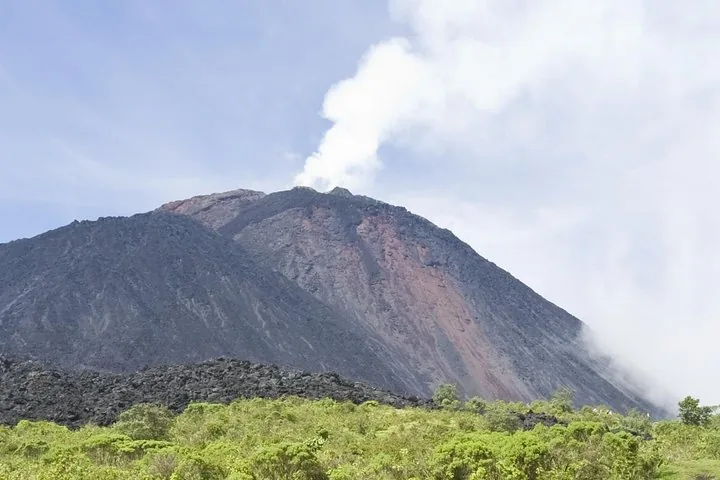
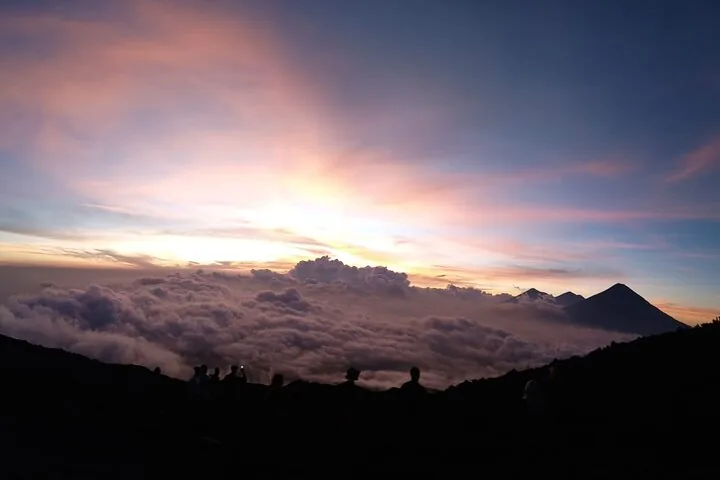
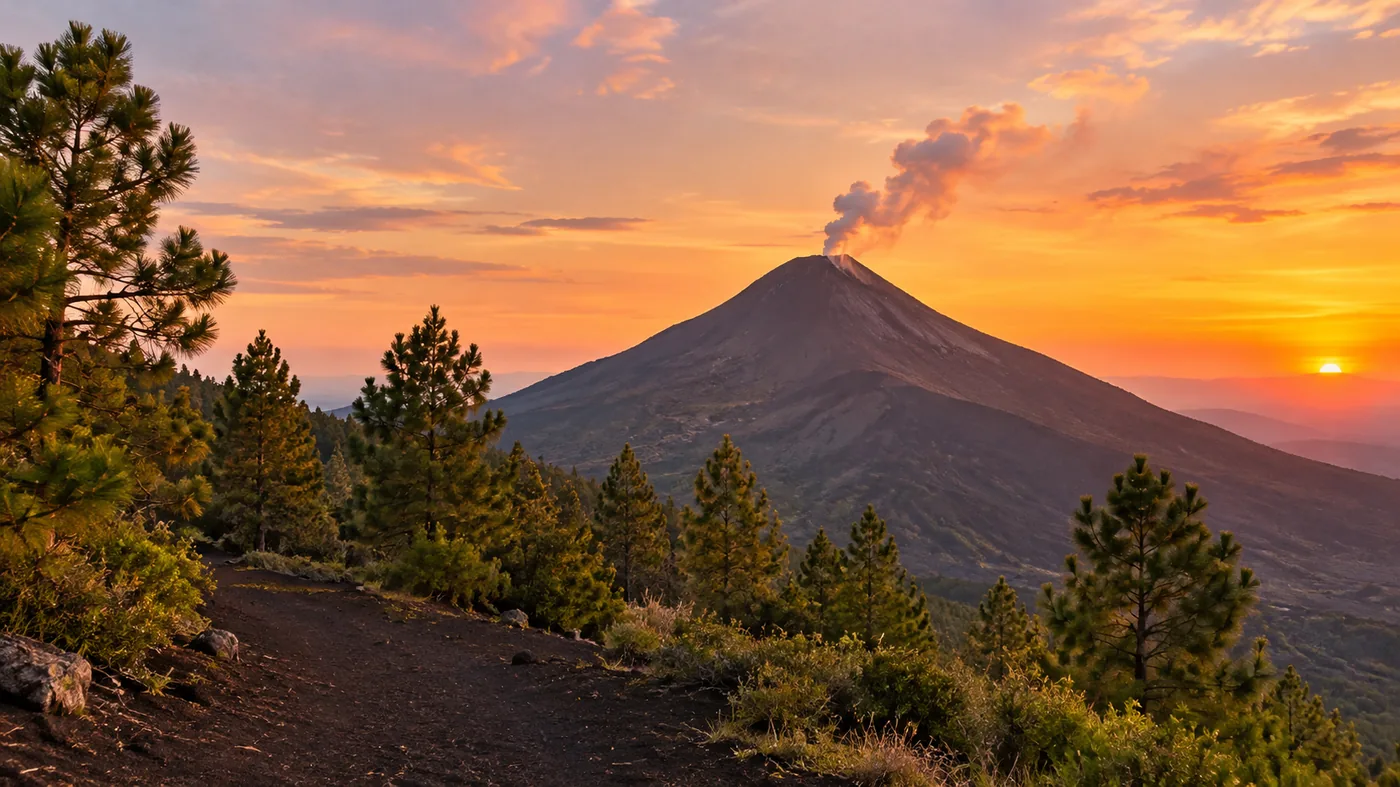
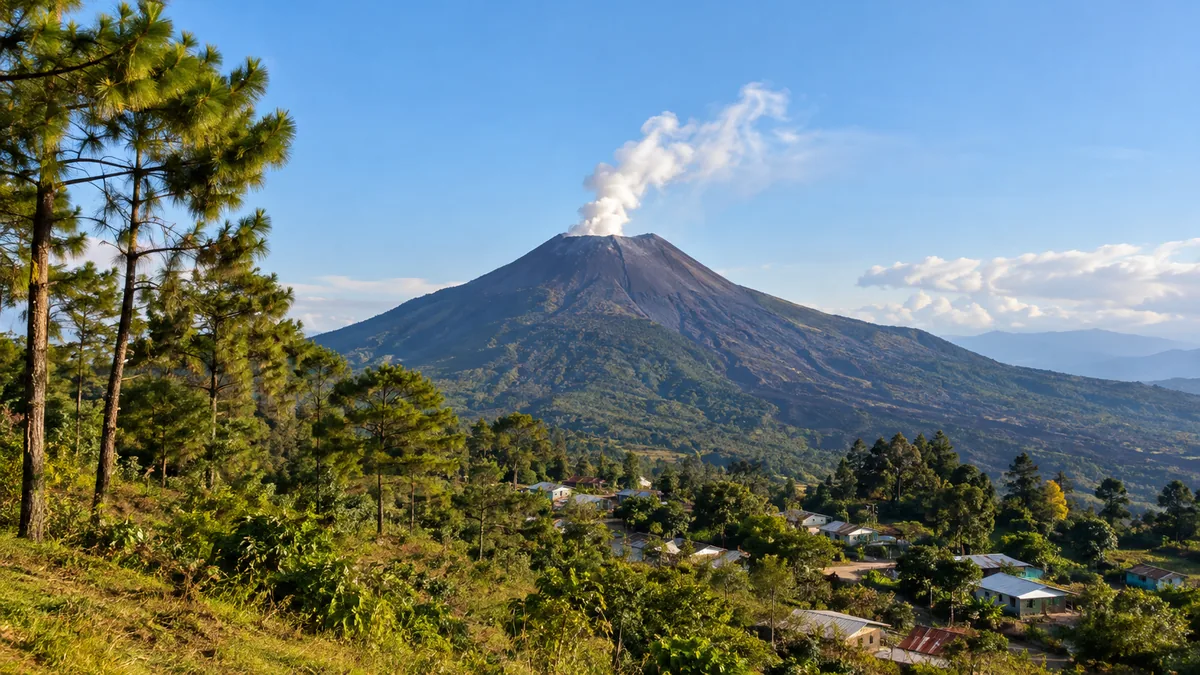
An active volcano 2,552 metres high, about an hour and a half from Antigua and Guatemala City.
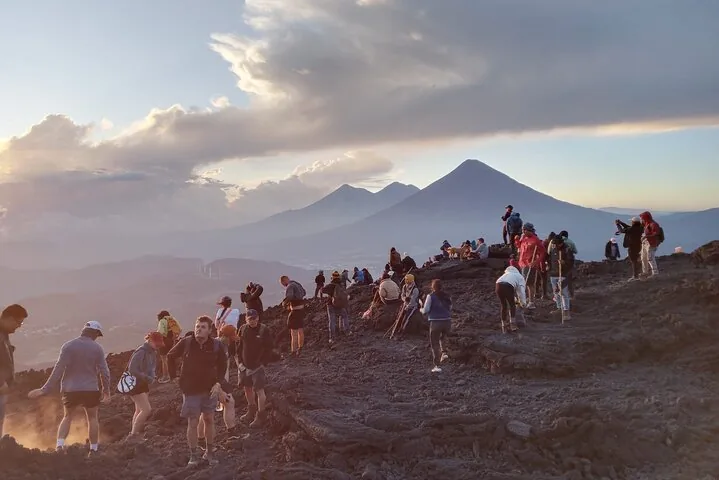
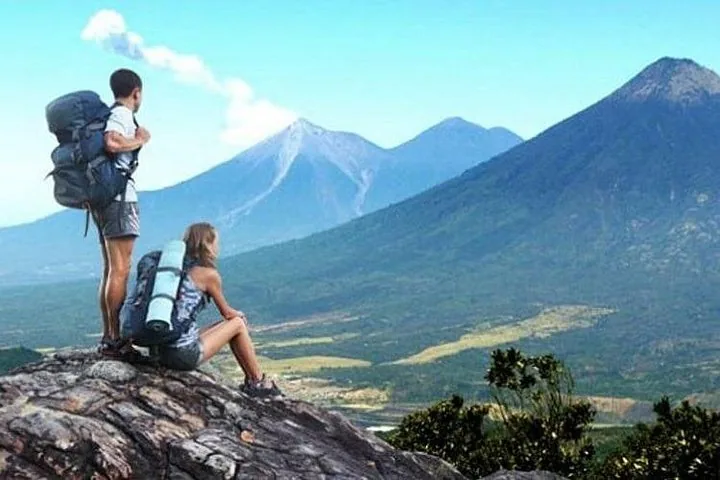
Climb through pine forest onto black lava that still steams, toast a marshmallow in a vent, and watch Agua, Fuego and Acatenango line the horizon.
The park fee, spelled outQ100 cash at the gate, and which tours include it
Antigua or Guatemala CityPickups from both, plus the cruise port
Free cancellationUp to 24 hours before, on every Pacaya tour here
Real trail times1.5 hours up, 30 minutes on the lava field
Tours
Choose your Pacaya volcano tour
In the centre, the shared hike from Antigua with the most reviews. Either side, the cheapest seat to the
trailhead and the shared tour from Guatemala City. Every card opens a full tour page.
The cheapest seat to the volcano: a shared air-conditioned van, a two-hour climb and marshmallows in the steam vents. Bring water, snacks and Q100 in cash.
What's included
Shared air-conditioned van from Antigua
Pickup at your hotel, drop-off at Central Park
About two hours uphill to the lava field
Not included: the Q100 park fee, drinks and snacks
A shared shuttle from Antigua and a bilingual guide for the classic climb: 1.5 hours up, 30 minutes on the lava, 50 down. Pay the Q100 park fee in cash at the gate.
Hotel pickup in Guatemala City, 1.5 hours to the volcano and a guide certified by the tourism board. Choose the premium option and the park fee is already paid.
What's included
Hotel pickup and drop-off in Guatemala City
Local guide certified by the Guatemalan Tourism Board
Three questions sort it out. Where are you sleeping? Do you want the park fee and a meal already paid?
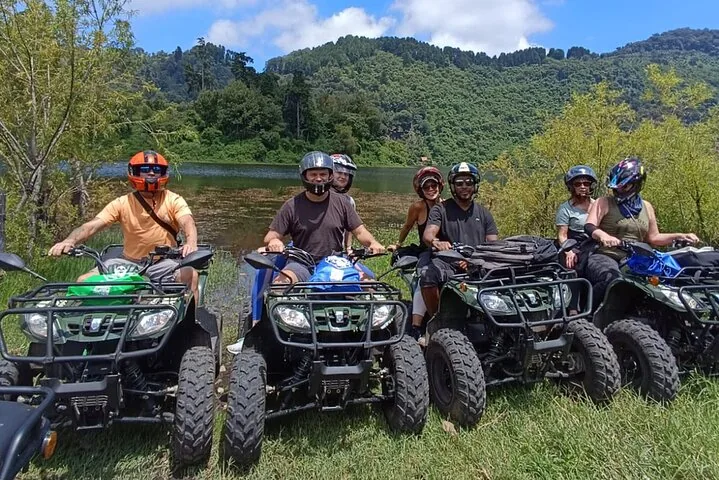
And will you walk, ride a horse or drive a quad?
The park fee is Q100 per foreign visitor, paid in quetzales cash at the gate (no cards, dollars or
euros). A horse from the trailhead costs about Q150 to Q300 a ride. Every Pacaya tour here cancels free up to 24 hours before.
Before you book
Up to the lava, not into the crater.
Almost every Pacaya tour follows the same shape. A van collects you in Antigua or Guatemala City and drives about an
hour and a half to San Francisco de Sales, the village at the park entrance. You pay the fee, meet a local guide and
climb through pine forest, then over loose volcanic sand, to the lava fields below the active cone. Half an hour up
there, a marshmallow or two in a steam vent, and you walk back down.
What changes from tour to tour is what the price covers. The cheapest shuttles leave out the park fee, which
you pay in cash. Others build it in, add lunch, put you on a horse or swap the trail for a quad. And nobody goes to
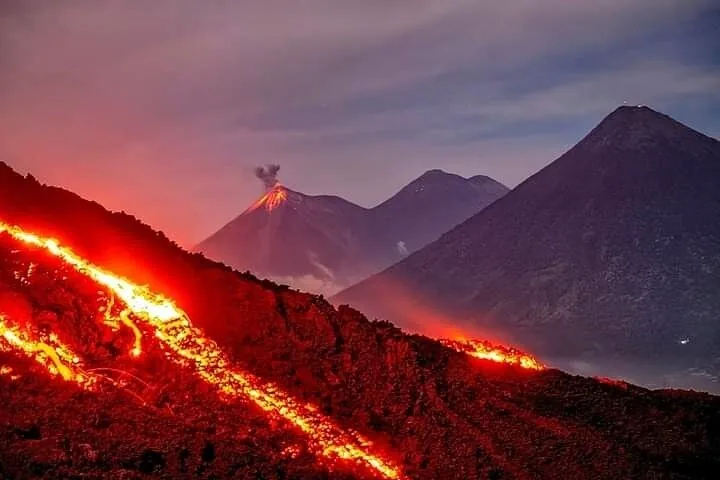
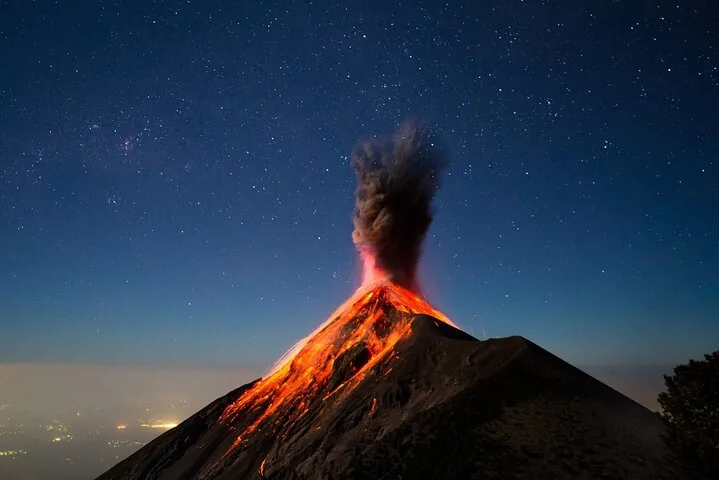
the crater: the summit is closed to hikers. The glowing rivers in old photos came from eruptive phases such as early
2021; today's listings promise steam and hot rock, not flowing lava.
Q100
The park fee per foreign visitor, about $13 to $14, paid in quetzales
at the gate. The cheapest tours leave it out of the price, so keep the cash handy.
Shared shuttleLunch includedHorsebackATV
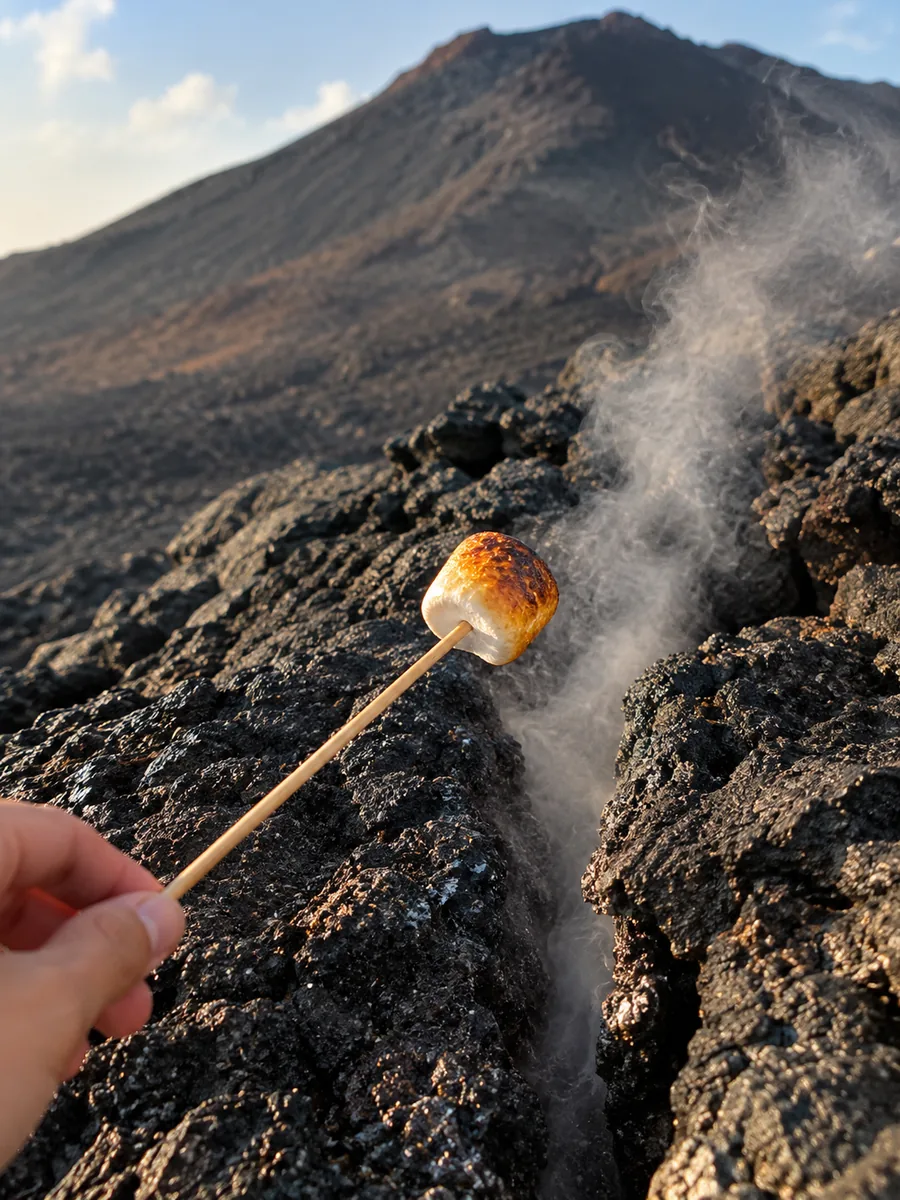
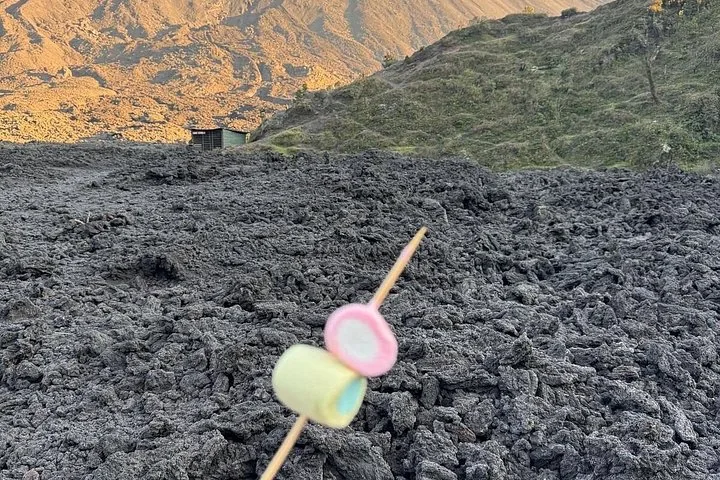
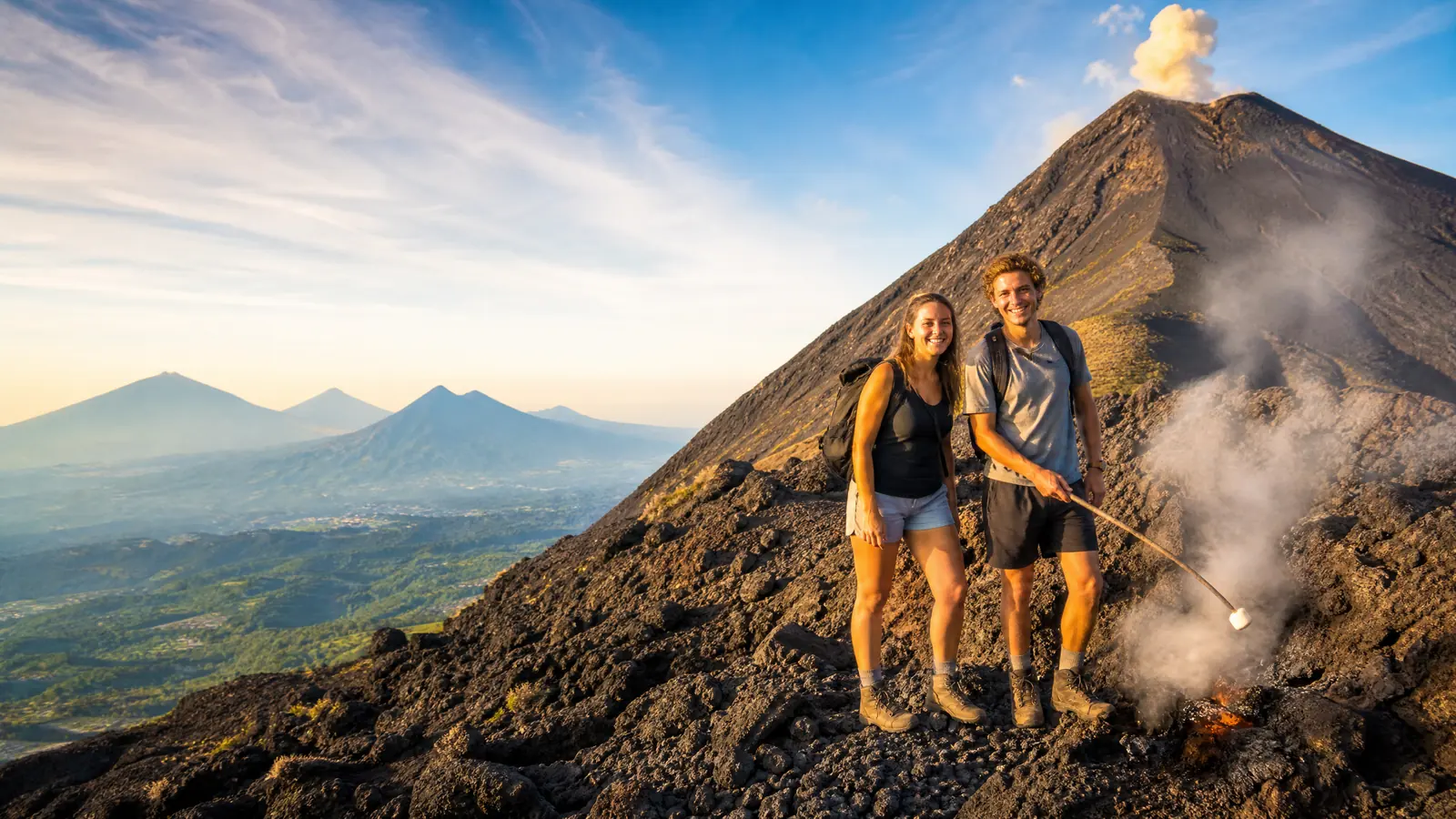
A marshmallow over a steam vent: the snack most guides pack for the top.
01
Do I reach the crater?
No. The trail ends on the lava fields below the active cone.
02
When is it best?
November to April is dry. In the May to October rains, take the morning departure.
03
How fit do I need to be?
Moderately: 1.5 to 2 hours uphill on loose sand. Horses wait at the trailhead.
04
Who should skip it?
Anyone pregnant or with a spinal injury or heart trouble: operators rule them out.
Your day
How a Pacaya hike runs
Six to seven hours door to door from Antigua, about the same from Guatemala City. About half of it is the drive.
01
Pickup
Shared vans leave Antigua at 06:00 or 14:00 and climb into the hills towards San Vicente Pacaya.
About 1.5 hours
02
Gate and guide
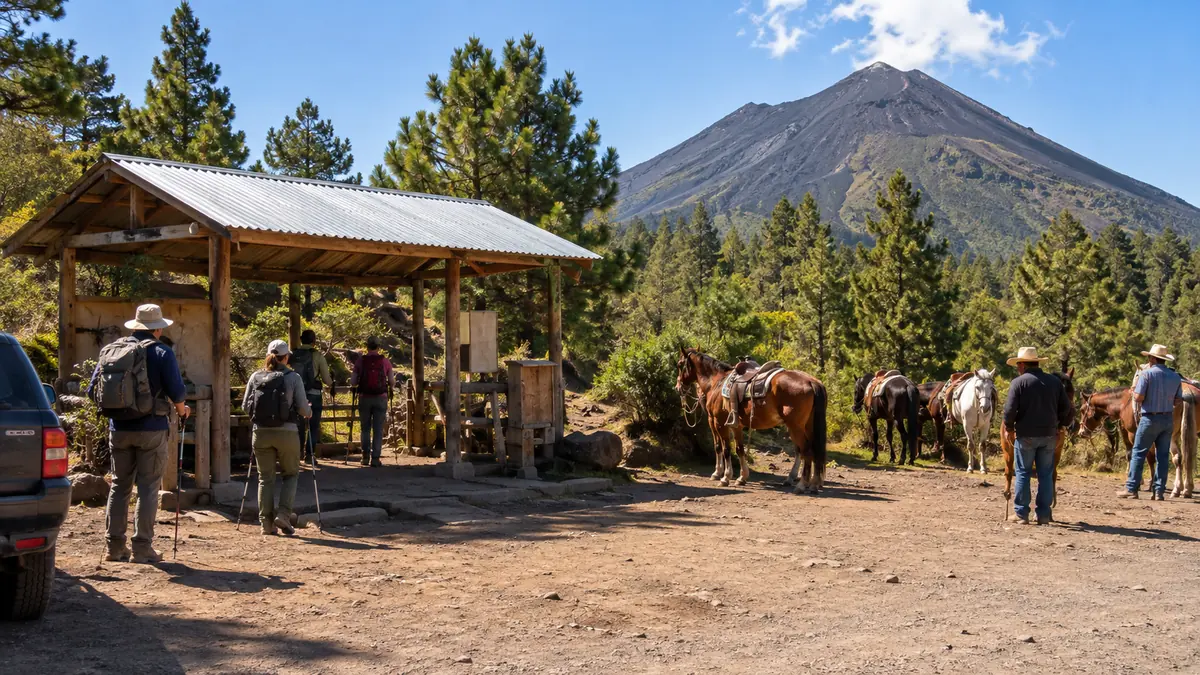
Pay the Q100 fee in cash at San Francisco de Sales, rent a walking stick for Q10 and meet your guide. Horses wait here.
15 to 20 minutes
03
Up the trail
Pine forest first, then loose volcanic sand and views opening over the valley as you near the lava field.
1.5 to 2 hours
04
Lava field, then down
Steam vents, warm rock, marshmallows and, if you ordered it, pizza. Then the walk back to the van.
Season, costs, fitness and age, and what to wear: one tab each.
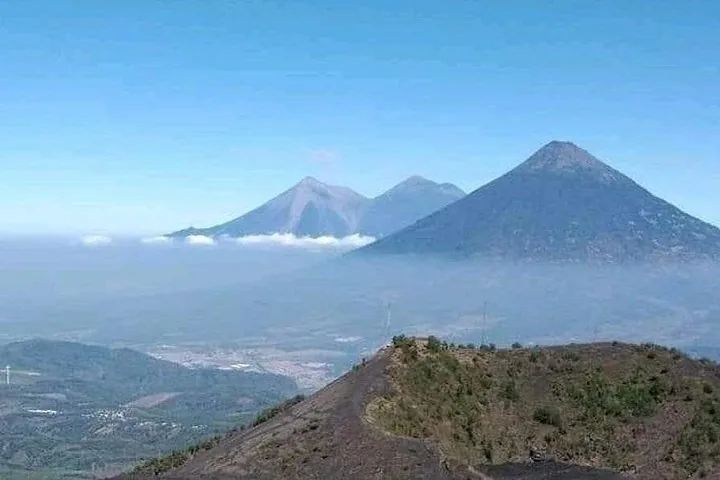
November to April: the dry season, with the clearest views of Agua, Fuego and Acatenango.
May to October: the rainy season. Rain usually comes in the afternoon, so operators steer you to the morning tour.
Morning departure (06:00): cooler air and the best chance of clear views.
Afternoon departure (14:00): warm late light on the lava field; in the rains, pack a raincoat and a torch.
Shared tour from Antigua: from $20 to $35, plus the Q100 park fee.
Shared tour from Guatemala City: from $73; the premium option includes the fee.
With park fees and lunch included: from $138.
Sunset horseback ride with a lava-cooked dinner: from $335; ATV tour outside the park: from $125.
Cash extras: horse about Q150 to Q300 a ride, walking stick Q10, pizza paid to the chef.
A moderate hike: 1.5 to 2 hours uphill, partly on loose volcanic sand, about 5 km there and back.
Minimum age 4 on the main shared tour from Antigua, 6 on the morning tour with lunch. Children hike with an adult.
Too steep? Rent a horse at the trailhead and ride part or all of the way up.
Not recommended if you are pregnant or have a spinal injury or heart condition.
Hiking shoes or boots with good grip and toe protection: the volcanic gravel is slippery.
Long trousers and a light jacket. The top is cooler and often windy.
Sun hat and sunscreen in the dry season, raincoat or poncho from May to October.
Water, a snack and quetzales in small notes. Full list in the what to wear guide.
From AntiguaAbout 1.5 hShared vans at 06:00 and 14:00, hotel pickup in the centre.
From Guatemala CityAbout 1.5 hHotel pickup; some tours include the park fee.
On foot1.5 to 2 h upAbout 30 minutes on the lava field, under an hour down.
Park feeQ100 cashPer foreign visitor, in quetzales only, at the gate.
HorseQ150 to Q300A ride up from the trailhead, paid to the handler.
Refund24 hoursFree cancellation up to a day before, on every Pacaya tour here.
Where it happens
Where the trail starts
San Francisco de Sales, transfer included
Park entrance: San Francisco de Sales, San Vicente Pacaya, Escuintla
Pacaya stands about 30 km south of Guatemala City, inside the Pacaya Volcano and Laguna de Calderas National Park.
The standard trail starts at the park entrance in San Francisco de Sales, a small village on the volcano's flank.
Every hiking tour here includes the drive, so you do not need a car; the ATV tour is the exception and starts at its
office in Antigua.
Was a great tour! The hike is a little more difficult than expected, but very fun. The first half is very strenuous, going straight uphill, but it was worth it for the marshmallows in the geothermal vents. Roberto and Omar were great guides.
★★★★★
The uphill climb was a bit hard but I'm 68. So I got a ride up the volcano on Chocolate, the horse. A very gentle horse. Once on top the view was amazing. Walking down the other side was easy. And the lunch waiting for us was great.
★★★★★
Outstanding tour! The tour guide (Leo) was excellent. Spoke perfect English and was quite entertaining. The ATVs were well maintained and the route that was planned was the perfect mix paved road, gravel road and complete off road!
★★★★★
Excellent trip and guides! [...] We were about 14 people, very nice and diverse group, it took us 45min to get to the highest point, then about 10min downhill to reach the sunset viewpoint (2pm hike). The walk back was quick, bring a flashlight because the last section is in the dark.
★★★★★
This was a good excursion. A 2.5km hike with 300 m elevation change. A gift shop and pizza or marshmallows cooked on the hardened lava. Quicker coming down than going up. Our tour guide, Davis, was outstanding and would do an excursion with him again.
★★★★★
Wonderful experience! My twin and I booked the early 8:30am tour and were greeted at our hotel by David. The ride over was stunning [...] The whole process was smooth and the ride up was very smooth and stress free, even for beginners.
★★★★★
Guide went at a comfortable pace, was very patient and explained everything well. He didn't rush me when the elevation got to me and I needed to catch my breath [...] and all the history and info on the area and the volcano was priceless! Matyox!
★★★★★
Driving the ATVs is actually easier than we expected and there is very little walking. The group travels together so depending on how fast everything is done depends on how long the excursion will be. We highly recommend this unique experience. Bring a swim suit and sunscreen!
★★★★★
Such a great tour! Our guide Eduardo was great. We only had 4 people in our group which also made it nice. The hike was not too difficult and the pizza and marshmallows at the top made it worth it. Highly recommend
The next volcano
Ready for a harder climb?
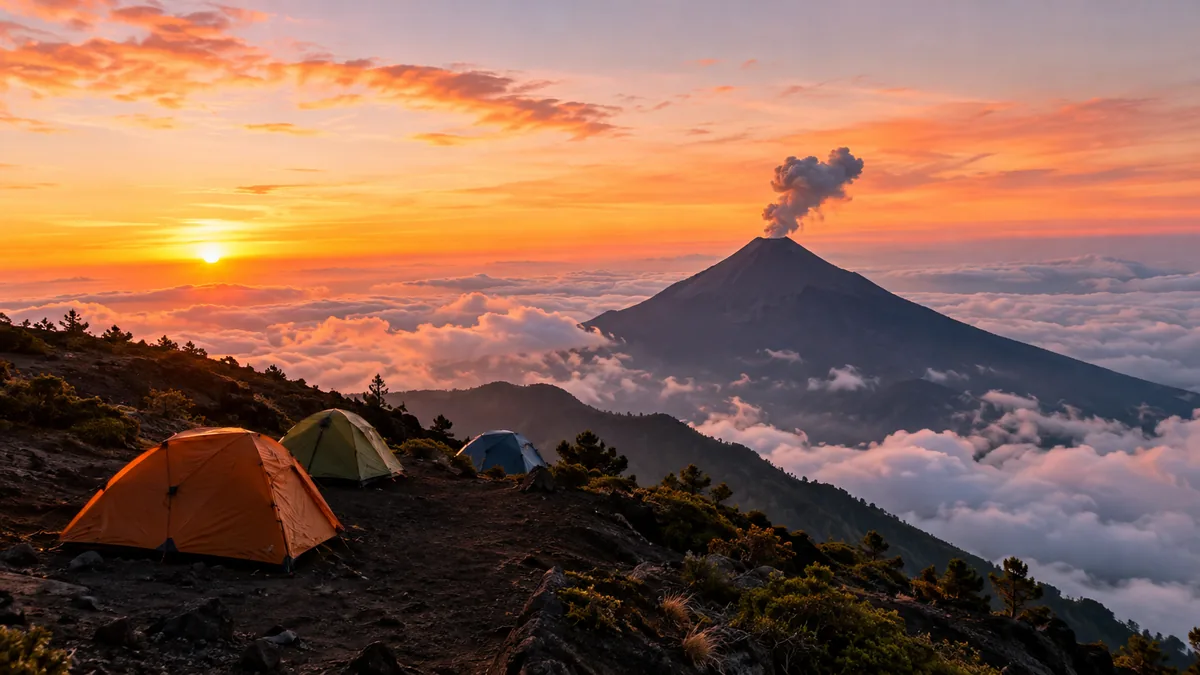
Pacaya is the warm-up. Acatenango is the overnight climb many people come to Antigua for.
Pacaya is the easy volcano. Acatenango is the hard one: a long, steep climb to cabins that face Fuego, which throws lava into the night sky when it is active. Meals, a sleeping bag and a winter jacket are included, and the booking is non-refundable, so be sure of your dates.
Pacaya is the volcano most visitors to Antigua climb first: close, active and short enough for an
afternoon. The tours look alike in the listings. Here is what actually happens, and where they differ.
The volcano
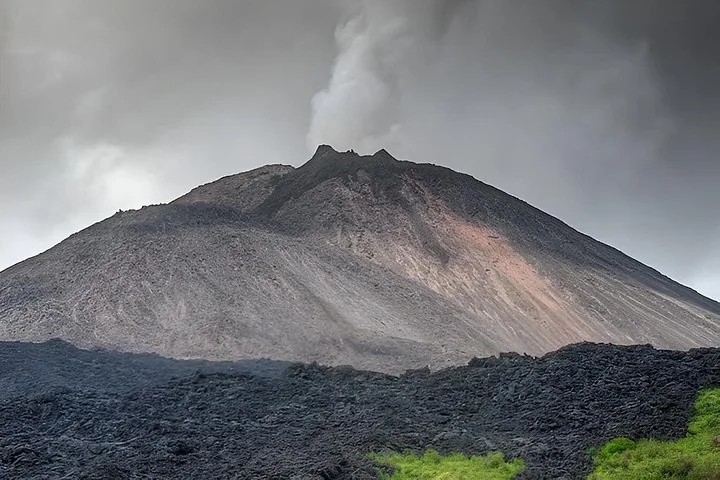
Pacaya rises to 2,552 metres in the department of Escuintla, about 30 km south of Guatemala City. It has two main
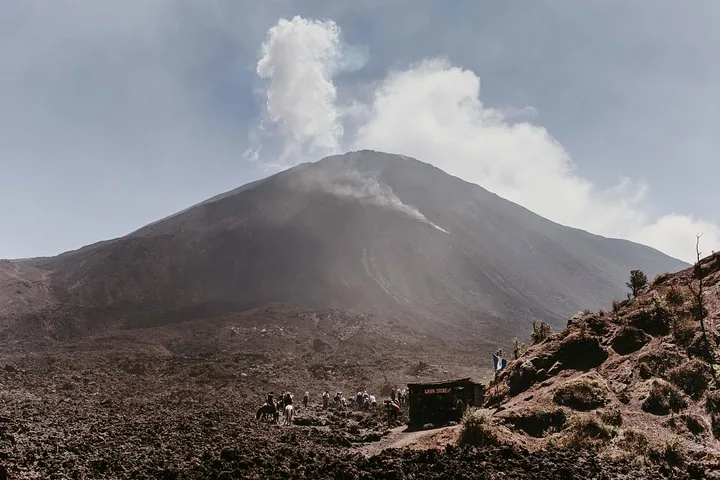
peaks: Cerro Chino, an old cone that no longer erupts, and the active cone, often called MacKenney, that you see smoking
above the lava fields. After more than 70 quiet years it woke up in 1961 and has been restless ever since. The big
eruption of May 2010 dropped ash on Guatemala City and closed the airport, and in early 2021 lava flows crept down the
flanks towards the villages of El Patrocinio and San José El Rodeo before stopping in mid-May.
The land around it has been the Pacaya Volcano and Laguna de Calderas National Park since 1963, run jointly by the
municipality of San Vicente Pacaya, the forestry institute INAB and the protected-areas council CONAP. That is why you
pay a fee at the gate and walk with a local guide. More on the activity side in
can you see lava at Pacaya.
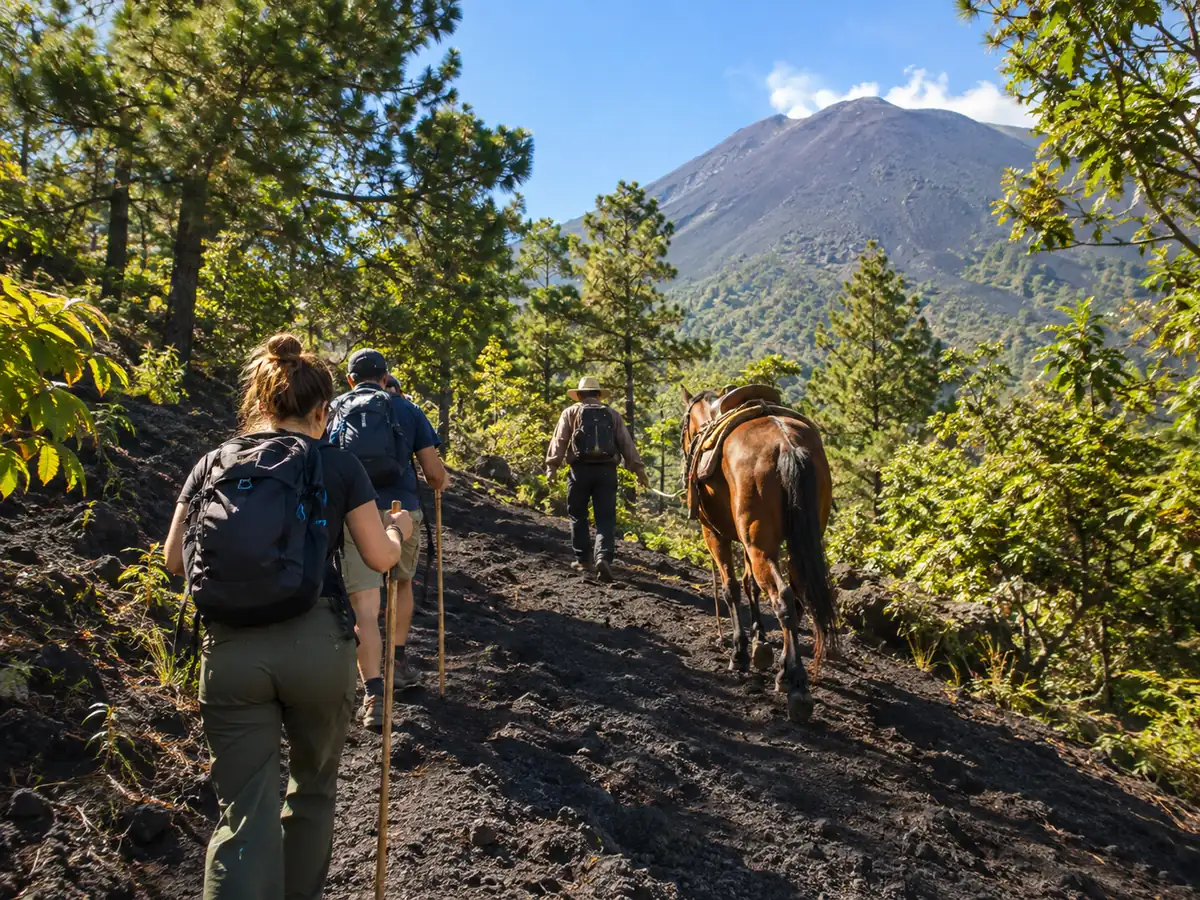
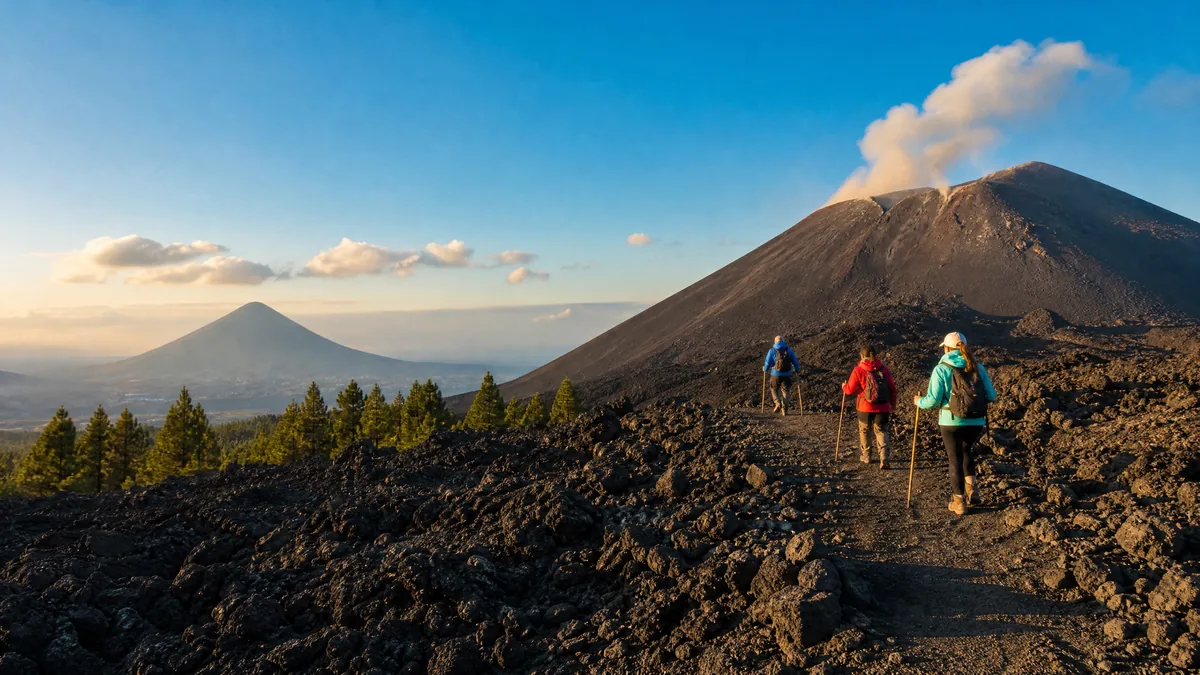
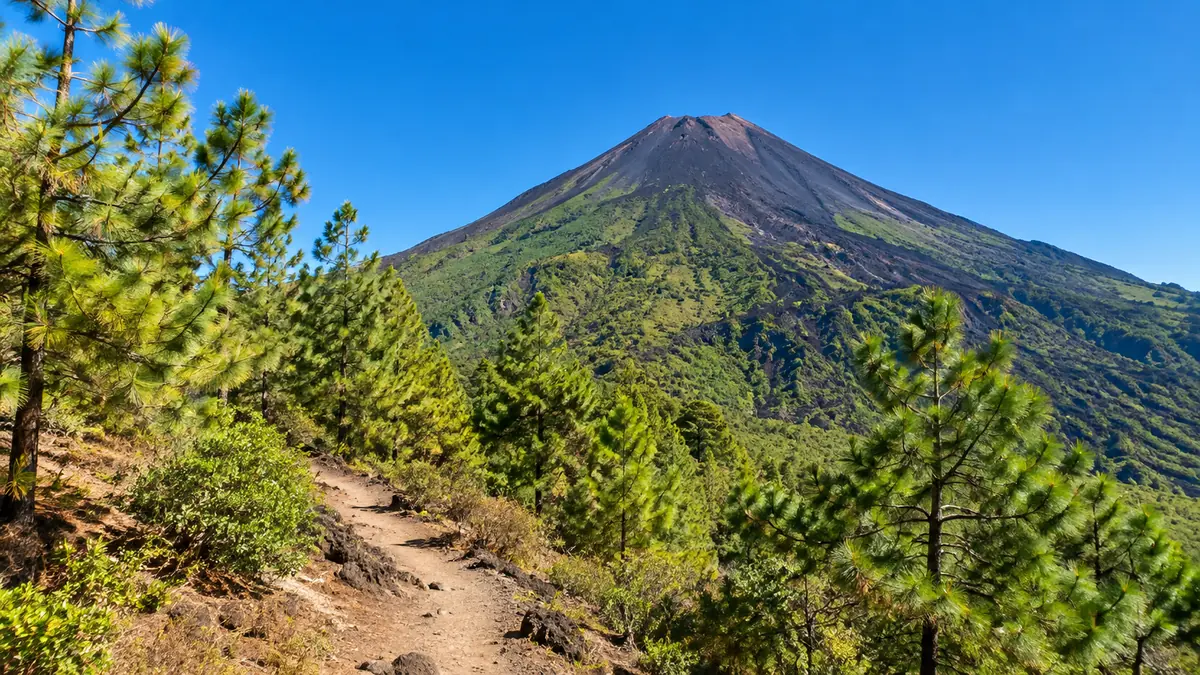
The lower trail climbs through pine forest before the trees give way to sand and lava.
The trail
The standard route starts at San Francisco de Sales, the village at the park entrance, and runs about 5 km there and
back. The first stretch climbs through pine and broadleaf forest on a dusty path; then the trees thin out, the ground turns
to black volcanic sand and the views open over the valley. Most groups reach the lava field in 1.5 to 2 hours. You stay
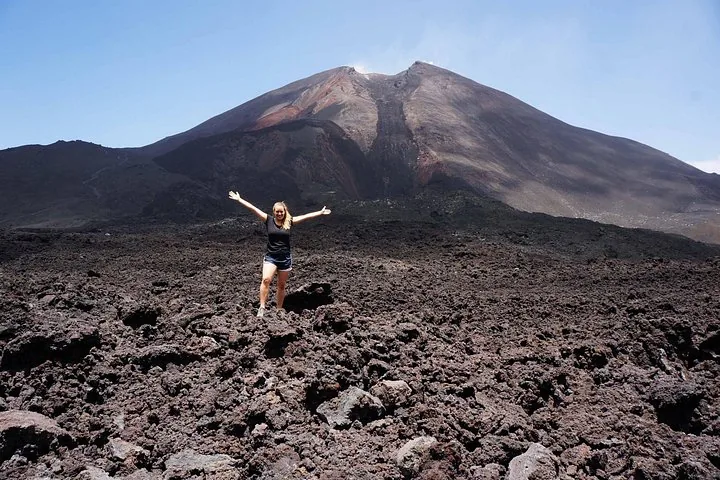
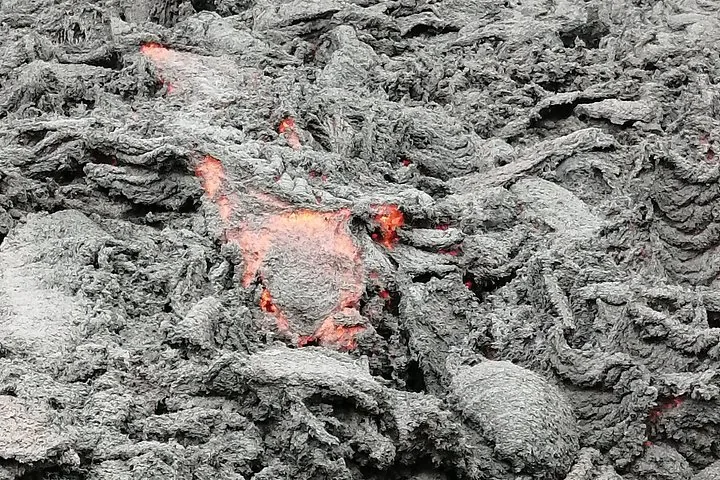
about half an hour among the jagged rock, where steam rises from cracks warm enough to toast a marshmallow, then come down
in under an hour. The sand is loose on the descent, which is why the Q10 walking sticks at the gate sell so well.
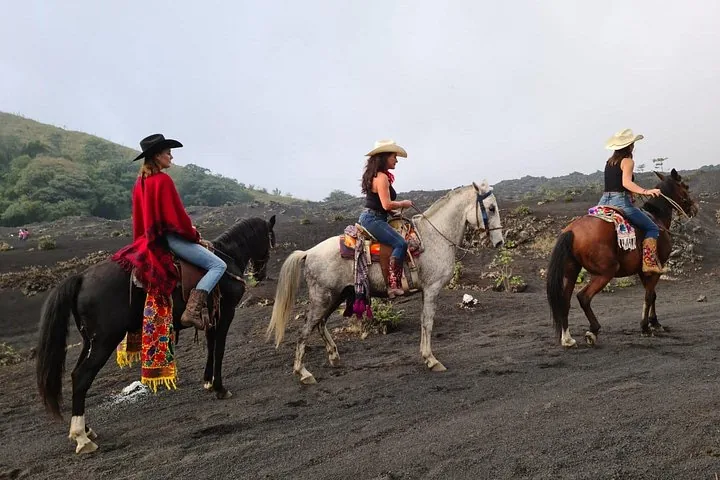
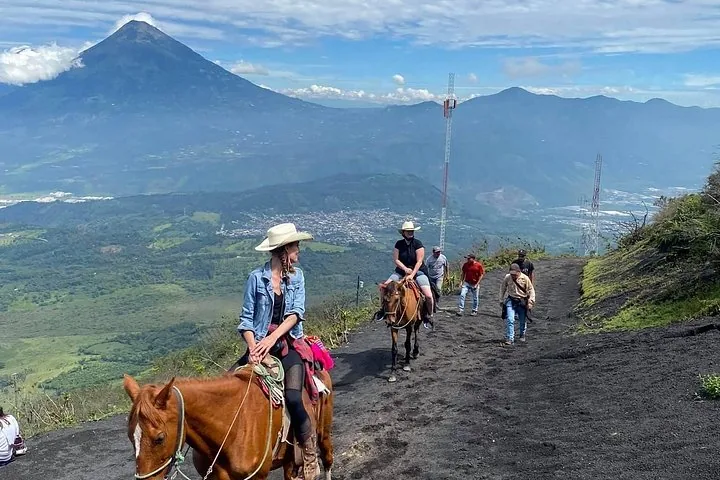
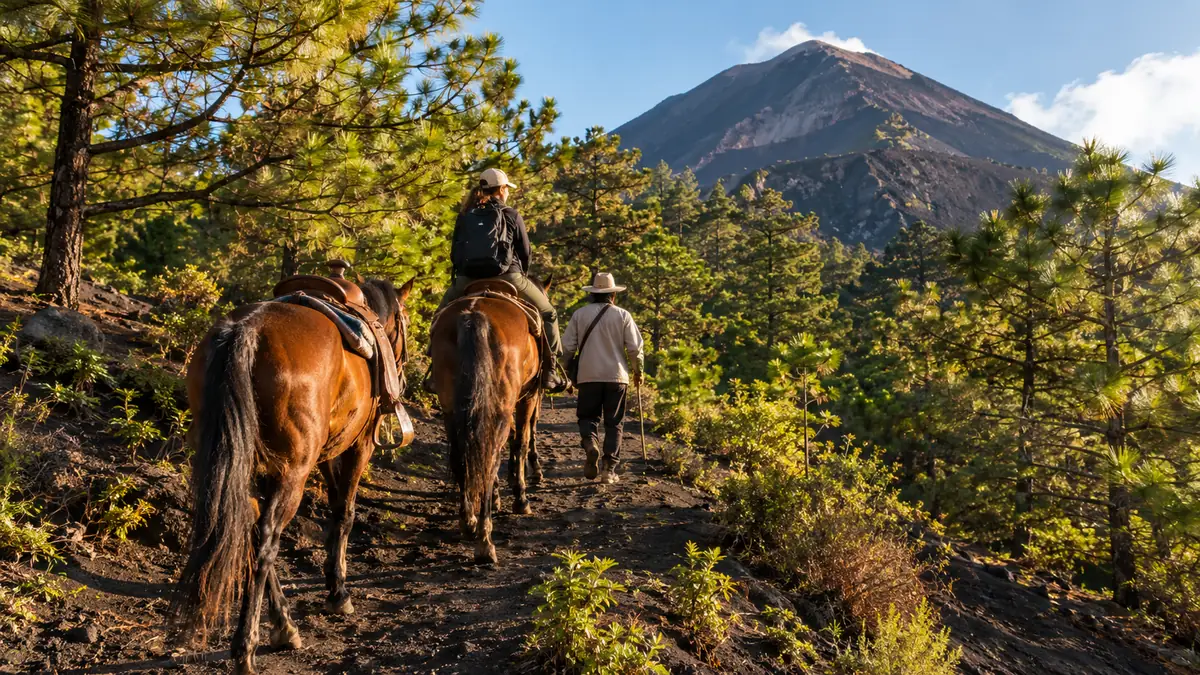
Horses are the plan B. Local handlers walk them up behind the groups, and you can hop on for roughly Q150 to Q300 a
ride. Kids from 4 do the main shared tour from Antigua; how hard it feels depends on the heat and your pace, which
our difficulty guide covers in detail.
The honest small print: the cheapest from-price is not what the day costs. Add the Q100 park fee,
in quetzales cash, unless your tour includes it, plus a horse or a pizza if you want one. And keep your expectations of
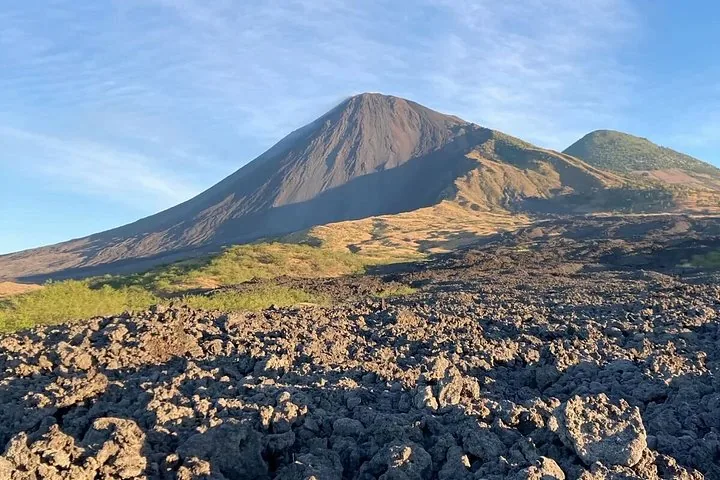
lava realistic: you stand next to the active cone, not on its rim, and you see steam and hot rock rather than rivers of fire.
Antigua or Guatemala City?
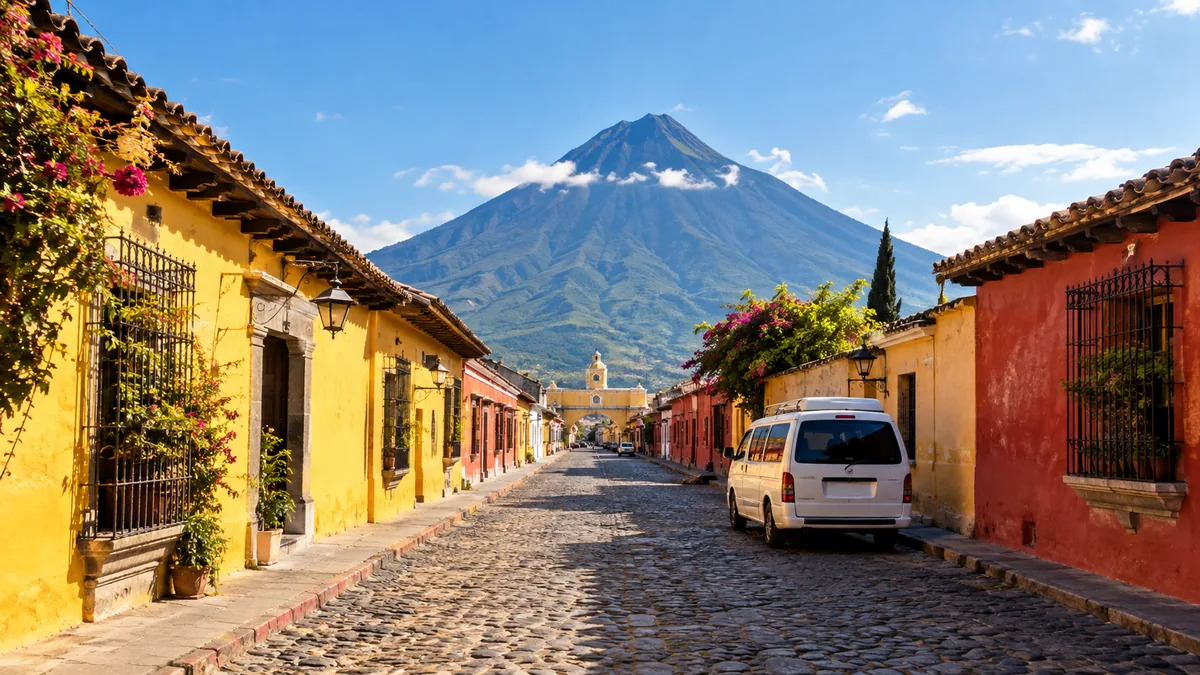
Both are about an hour and a half from the trailhead, so start from wherever your bed is. Antigua has the most choice
and the lowest prices: shared vans leave at 06:00 and 14:00, and the cheapest seat costs $20 before the fee. Tours from
Guatemala City cost more, from $73, but they pick up at city hotels and some fold the fee into the price. Arriving on a
cruise ship? There is a tour from Puerto Quetzal with a box lunch. The side-by-side is in
Antigua or Guatemala City.
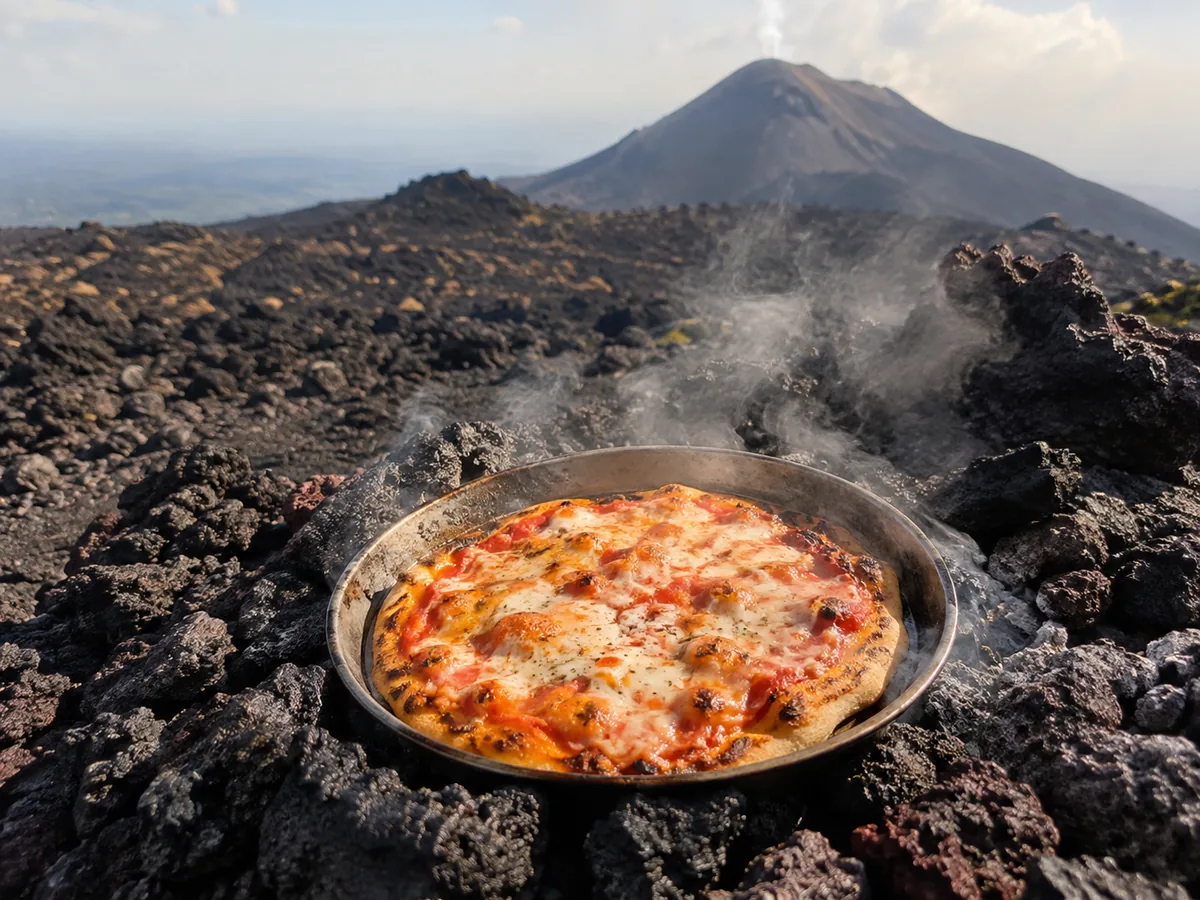
Pizza baked in the heat of the rock is Pacaya's party trick. On most tours you pay the chef yourself.
Pizza, marshmallows and the Lava Store
The food is half the fun. Guides bring marshmallows to roast in the steam vents, and Pizza Pacaya, started by David
García, bakes pizzas in the heat of the lava on the trail. On most tours the pizza is an extra you arrange and pay for
yourself; the sunset horseback ride includes a lava-cooked
dinner. Near the top there is also the Lava Store, a small shop selling jewellery and souvenirs made from volcanic rock.
Timing it
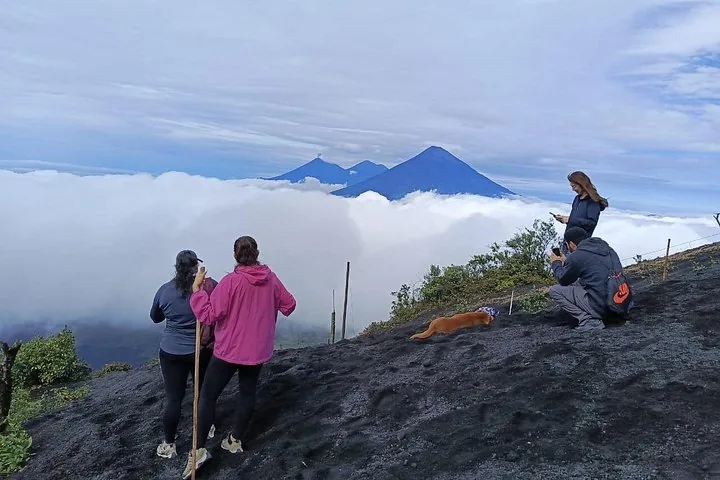
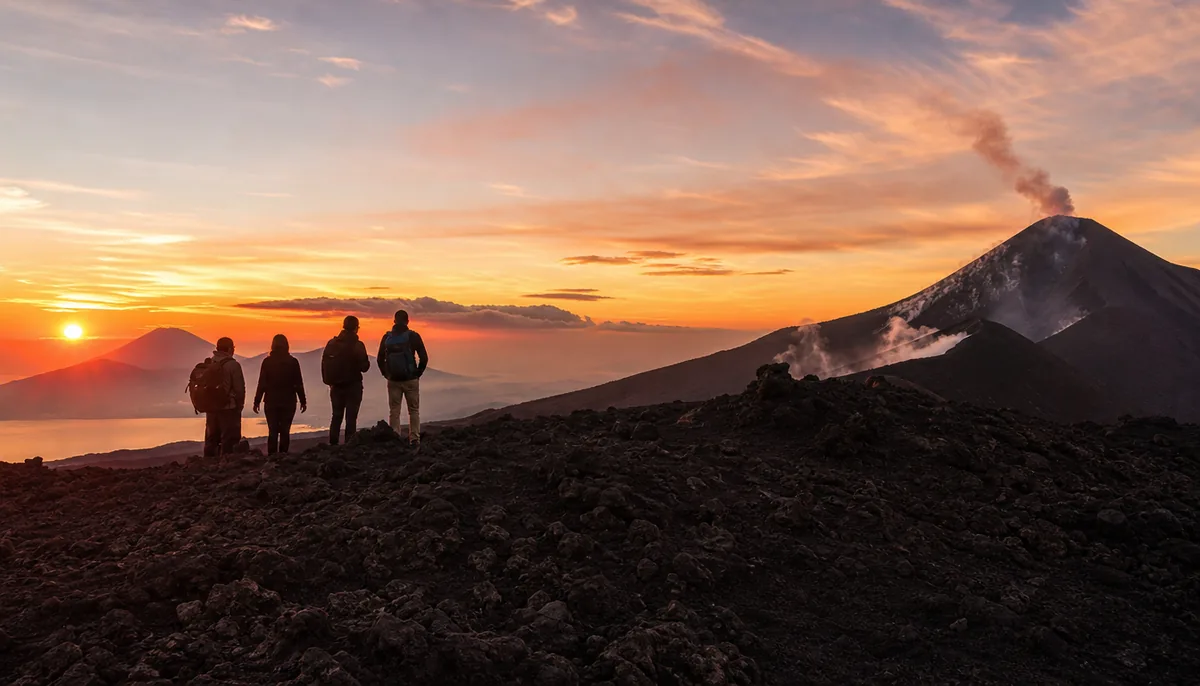
The dry season, November to April, gives the clearest views of Agua, Fuego and Acatenango. From May to October rain
tends to arrive in the afternoon, so book the morning departure and pack a raincoat either way. Whatever the month,
check the INSIVUMEH bulletins in the week before you go: the park closes when the authorities restrict access, and your
tour then cancels with a refund.
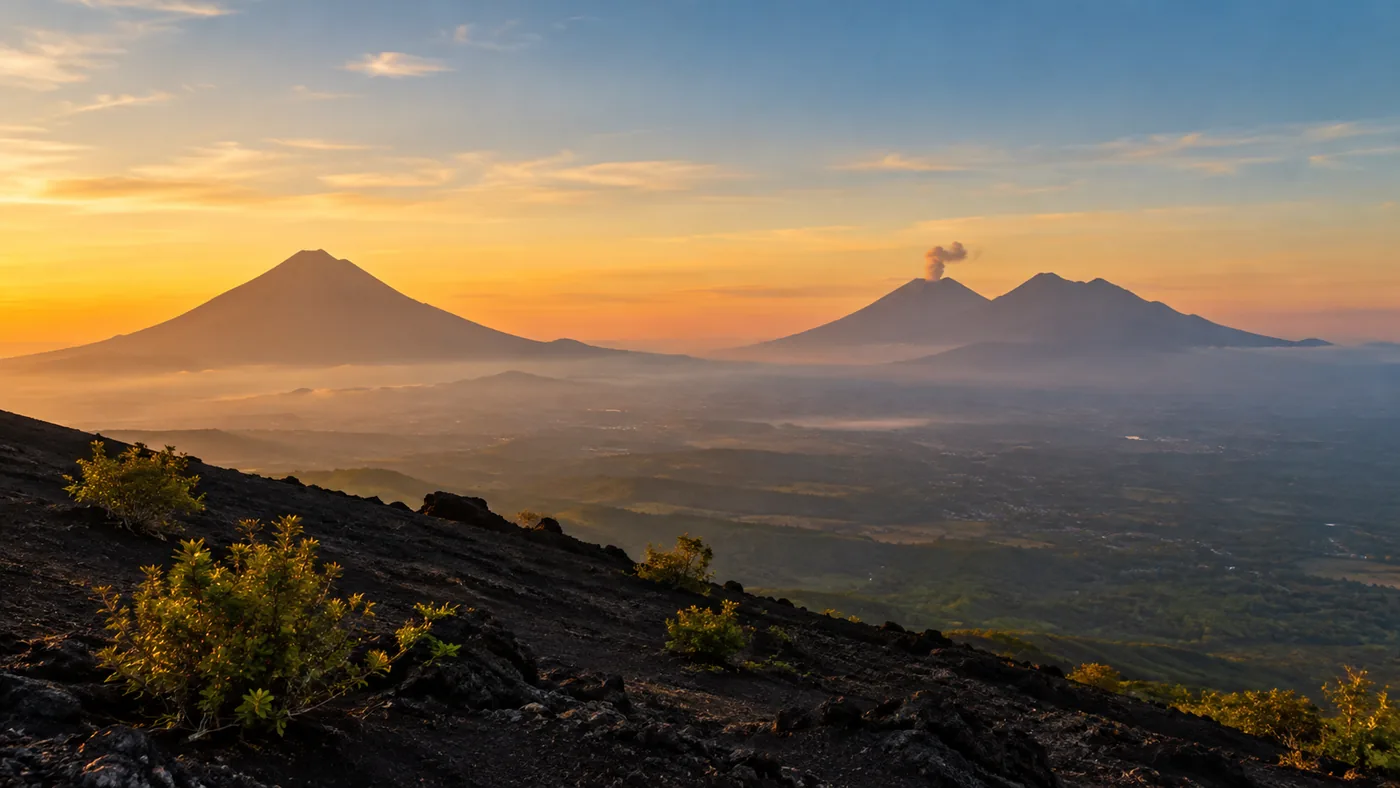
On a clear morning, three more volcanoes line up across the valley.
Straight answers to what people ask most about hiking Pacaya.
How much does it cost to hike Pacaya volcano?
Online, a shared tour from Antigua starts at $20 to $35 per person, plus the Q100 park fee in cash. A shared tour from Guatemala City starts at $73, and tours with the fee and lunch included start at $138. Horses and pizza on the trail cost extra. The full breakdown is in the price guide.
Is the Pacaya park entrance fee included in the tour?
Usually not on the cheapest tours. Foreign visitors pay Q100 per person (about $13 to $14) at the park gate, in quetzales cash only. A few tours build it in, such as the Guatemala City day trip and the premium option of the shared city tour. Read the park fee post before you go.
How long is the Pacaya volcano hike?
About 5 km there and back. Most groups take 1.5 to 2 hours up, spend about 30 minutes on the lava field and need 50 minutes to an hour to come down. With the drive from Antigua or Guatemala City, the whole trip takes 6 to 7 hours.
Can you see lava at Pacaya?
Not flowing lava, most of the time. The big lava flows of early 2021 stopped in May 2021, and the main Antigua listing says plainly that no flowing lava is visible. You walk on cooled lava, feel the heat in the rock and see steam vents. More in can you see lava at Pacaya.
Can you hike to the crater of Pacaya?
No. Hikers stop at the lava fields below the active cone, and operators state that you cannot walk up to the summit for safety reasons. The view of the smoking cone from the lava field is the payoff.
Is the Pacaya hike hard?
It is the easiest of the well-known volcano hikes near Antigua, but it is still 1.5 to 2 hours uphill, partly on loose volcanic sand. Most people with average fitness manage it. Horses wait at the trailhead for about Q150 to Q300 a ride. See how hard is the Pacaya hike.
Should I go from Antigua or Guatemala City?
Go from wherever you are sleeping: both are about 1.5 hours from the trailhead. Antigua has the cheapest shared tours and two departures a day, 06:00 and 14:00. Guatemala City tours cost more but often include the park fee. Compare them in Antigua or Guatemala City.
Is Pacaya safe to visit?
When the park is open, yes, with a guide on the marked trail. INSIVUMEH monitors the volcano, and the park closes when the authorities restrict access, as it did during the 2021 eruption. Tours then cancel. Check the latest in Pacaya activity in 2026.
What should I wear to hike Pacaya?
Hiking shoes or boots with grip, long trousers and a light jacket for the cooler top. In the May to October rains add a raincoat, and a torch on afternoon tours. Bring water, sunscreen and quetzales in cash. Full list in what to wear for Pacaya.
Can children hike Pacaya?
Yes, with an adult. The main shared tour from Antigua takes children from age 4, and the morning tour with lunch from age 6. Kids who tire can ride a horse for part of the climb.
Can you eat pizza on Pacaya volcano?
Yes. Pizza Pacaya bakes pizzas in the heat of the lava rock on the trail, but on most tours you order and pay the chef yourself. The horseback tour with a lava-cooked dinner includes it.
Should I hike Pacaya or Acatenango?
Pacaya is a half-day walk with warm lava rock; Acatenango is a hard overnight climb to watch Fuego erupt. Fit travellers with two free days often do both. See Pacaya or Acatenango.
Ready to book
Pick your departure, pack your quetzales.
Hotel pickup on every hiking tour, and free cancellation up to 24 hours before.

 Lowest price
★ 4.57 hoursFree cancellation