Booking choice: The shared hike from Antigua, from $35 per person. Check dates Tour details
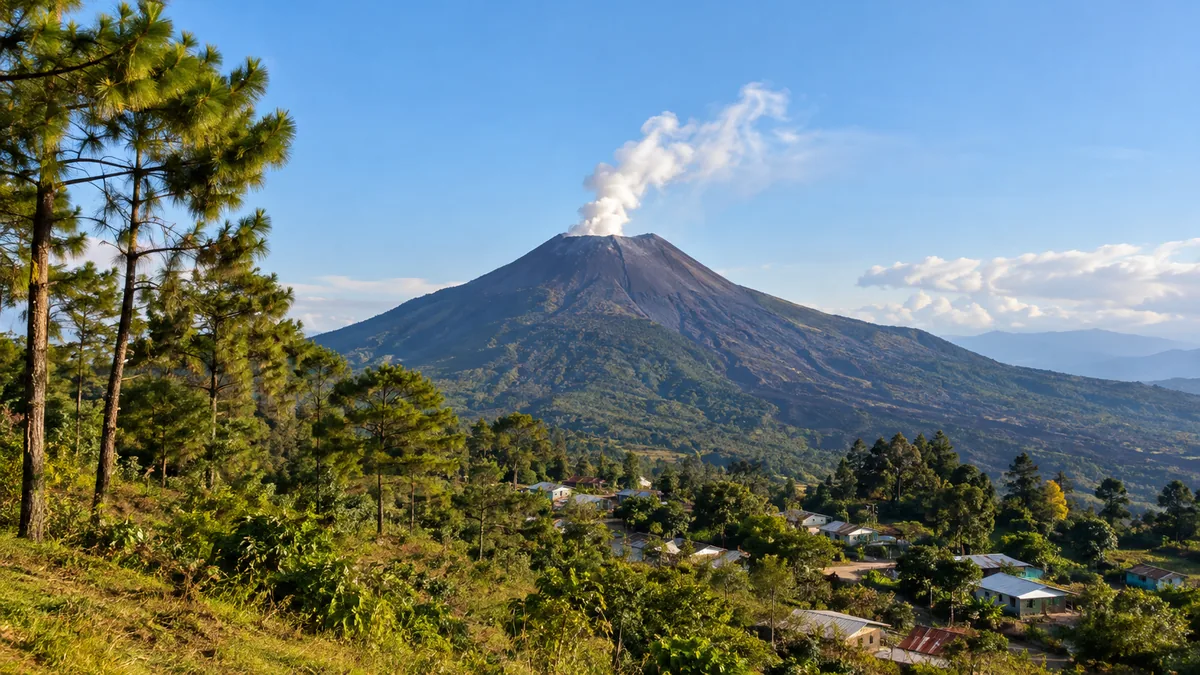
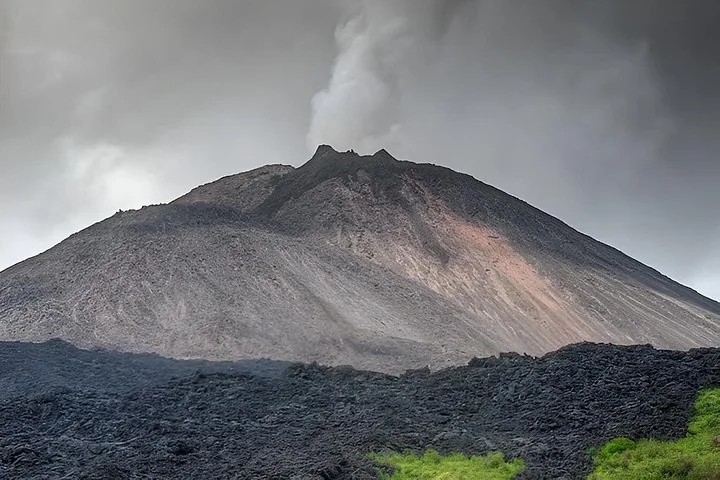
Pacaya woke up in 1961 after more than 70 years of quiet and has hardly stopped since. Most of the time that means steam, gas and hot ground, which is exactly what hikers come to see. Every few years it means lava flows, ash and a closed park.
This post sums up what the official sources reported up to 15 October 2026 and shows you how to check the latest bulletin yourself. Volcanoes change fast: treat any status here as dated.
The quick answer
Pacaya's last big eruptive phase ran from February to May 2021. Since early 2026 INSIVUMEH has reported renewed unrest, mostly gas and vapour plumes, and in May 2026 the authorities told visitors to keep off the lava flows and away from fissures on the west flank. As of mid October 2026 the reported activity was weak degassing and tours were running. Check INSIVUMEH's daily bulletin before you go. If the authorities close the park, tours cancel and you get a new date or a refund.
What has Pacaya done since the 2021 eruption?
A strong eruption from February to May 2021 sent lava towards villages and closed the park; lava flows ended in mid May 2021, with minor ash in June and August.
The 2021 phase started in February with explosions and lava flows towards El Patrocinio and San José El Rodeo, in San Vicente Pacaya municipality (Wikipedia). Tourist sites around the volcano were closed in March (Emisoras Unidas, 9 March 2021).
On 24 April 2021 CONRED, the civil protection agency, said the park could reopen with conditions: no visits to the new cinder cone on the southwest flank and restricted zones around the fresh flows (Prensa Libre). Five days later a new fissure opened on the north flank and lava ran towards Cerro Chino (Prensa Libre, 29 April 2021). That is how quickly things move on Pacaya. The lava stopped in mid May 2021.
| Date | What happened |
|---|---|
| 27 May 2010 | Major eruption, ash over Guatemala City, airport closed |
| February 2021 | New eruptive phase, explosions and lava flows |
| March 2021 | Tourist sites around the volcano closed |
| 24 April 2021 | CONRED allows the park to reopen with restricted zones |
| 29 April 2021 | New fissure on the north flank, fast lava flow |
| Mid May 2021 | Lava flows end |
| June and August 2021 | Minor ash emissions |
What has Pacaya been doing in 2026?
Renewed unrest since early 2026: gas and vapour plumes, gas measurements on the 2021 flows, a warning in May to keep off lava flows and west-flank fissures, and weak degassing reported in August and October.
Wikipedia notes that Pacaya began showing increased unrest in early 2026, and that on 9 March 2026 INSIVUMEH, the national volcano observatory, reported continued unrest with gas and vapour plumes rising from inside the crater. In April, INSIVUMEH measured sulphur dioxide with a mobile instrument on the south flank, over the 2021 lava flows (La Hora, 16 April 2026).
On 29 May 2026 the national news agency AGN reported that "authorities recommended not walking on lava flows or approaching fissures on the west flank", because of unstable fractures and constant gas emissions (AGN, our translation). INSIVUMEH's bulletin of 19 August 2026 described weak degassing of water vapour and magmatic gases towards the west, with no explosions recorded (Stereo 100).
The most recent summary we found, on the Living in Guatemala Pacaya tracker on 14 October 2026, quotes INSIVUMEH as reporting "mild fumarolic activity and degassing from the MacKenney crater" with no significant eruptions. An Antigua operator, Cyman Travel, said in August 2026 that Pacaya tours were departing daily. We found no official notice of a park closure in 2026 up to 15 October.
| Date (2026) | Reported by | What was reported |
|---|---|---|
| Early 2026 | INSIVUMEH (via Wikipedia) | Increased unrest begins |
| 9 March | INSIVUMEH | Unrest continues, gas and vapour plumes |
| 16 April | INSIVUMEH (via La Hora) | Sulphur dioxide measured on the south flank |
| 29 May | Authorities (via AGN) | Keep off lava flows and west-flank fissures |
| 19 August | INSIVUMEH bulletin | Weak degassing, no explosions |
| 14 October | INSIVUMEH (via Living in Guatemala) | Mild fumarolic activity, no significant eruptions |
How do INSIVUMEH and CONRED report Pacaya's activity?
INSIVUMEH is the science side: it watches the volcano and publishes daily and special bulletins. CONRED is civil protection: it declares colour-coded alerts and, with local authorities, restricts access.
INSIVUMEH (Instituto Nacional de Sismología, Vulcanología, Meteorología e Hidrología) runs seismic stations and cameras on Guatemala's active volcanoes. It publishes a daily volcano bulletin covering Fuego, Santiaguito and Pacaya, and special bulletins when something changes. It also posts them on X as @insivumehgt. Bulletins are in Spanish; the key words are desgasificación (degassing), explosiones, flujo de lava and incandescencia (glow).
CONRED (Coordinadora Nacional para la Reducción de Desastres) turns that science into action. Its alerts are institutional: they tell agencies what to prepare, and they can cover a volcano, a storm or a drought. The orange national alert CONRED declared on 11 September 2026 was about climate variability, not about any volcano (Living in Guatemala). Read the alert's subject before you panic.
| CONRED alert | Meaning | What it means for a hike |
|---|---|---|
| Green | Normal, no emergency | Tours run |
| Yellow | A dangerous event is foreseeable | Check the bulletin and your operator |
| Orange | Emergencies or disasters are likely | Expect restrictions near the volcano |
| Red | Major event, full response | Assume the park is closed |
How do you check Pacaya's status before you go?
Read INSIVUMEH's daily bulletin the evening before, scan CONRED's news page, and message your tour operator. If any of them mentions restricted access, it is off.
Our routine, in order:
- Open the INSIVUMEH daily bulletin and find the Pacaya paragraph. Degassing and fumaroles are normal. Explosions, lava flows or incandescence mean a change.
- Look at the volcano surveillance cameras page for a live view.
- Check conred.gob.gt for anything naming Pacaya or San Vicente Pacaya.
- Message your operator. The Antigua flagship operator answers WhatsApp Monday to Friday, 9:00 to 18:00, and prioritises confirmed bookings outside those hours.
In the rainy months, CONRED and INSIVUMEH also warn about lahars and mudslides on volcanic slopes after heavy rain. That risk drops as the dry season sets in from November; our dry-season post has the dates.
What happens to your Pacaya booking if the park closes?
The tour is cancelled and you get a new date or a full refund. You can also cancel yourself for free up to 24 hours before.
The listings spell it out. The flagship tour from Antigua "runs rain or shine, and will only be canceled in the event of a dangerous storm or if local authorities restrict access". The Guatemala City tour says that if it is cancelled for poor weather, "you will be given the option of an alternative date or full refund". Every Pacaya tour on this site also has free cancellation up to 24 hours before departure, so if the bulletin worries you two days out, you can step back at no cost.
Two cautions. The ATV tour stays outside the national park, so a park closure alone may not cancel it; ask the operator if the authorities restrict the wider area. And the two-day Acatenango overnight is non-refundable, which matters in a year when its neighbour Fuego has also been erupting (La Hora, 13 September 2026).
| Situation | What happens | Your money |
|---|---|---|
| You cancel 24 hours or more before | Booking cancelled | Full refund |
| You cancel less than 24 hours before | Booking stands | No refund |
| Rain, normal weather | Tour runs | No change |
| Dangerous storm | Operator cancels | New date or full refund |
| Authorities restrict access to the park | Operator cancels | New date or full refund |
Free cancellation up to 24 hours before, and the operator cancels if the authorities close access.
Explore the shared hike from Antigua Tour detailsWill you see lava at Pacaya in 2026?
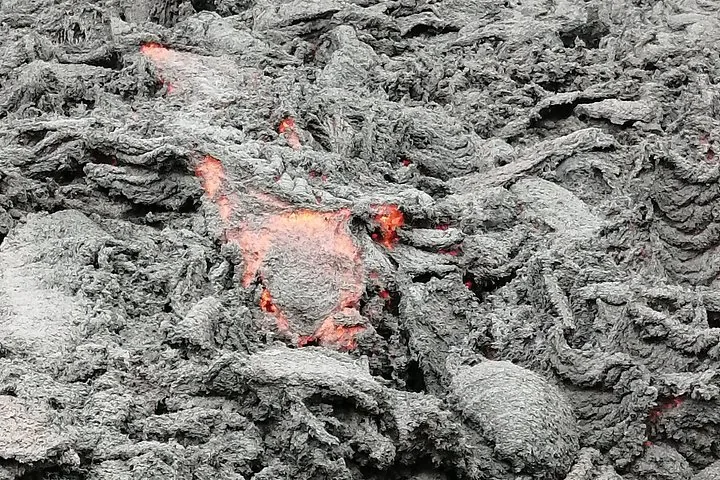
Probably not. The 2026 reports describe degassing and gas plumes, not active lava, and the main operator states that no flowing lava is visible.
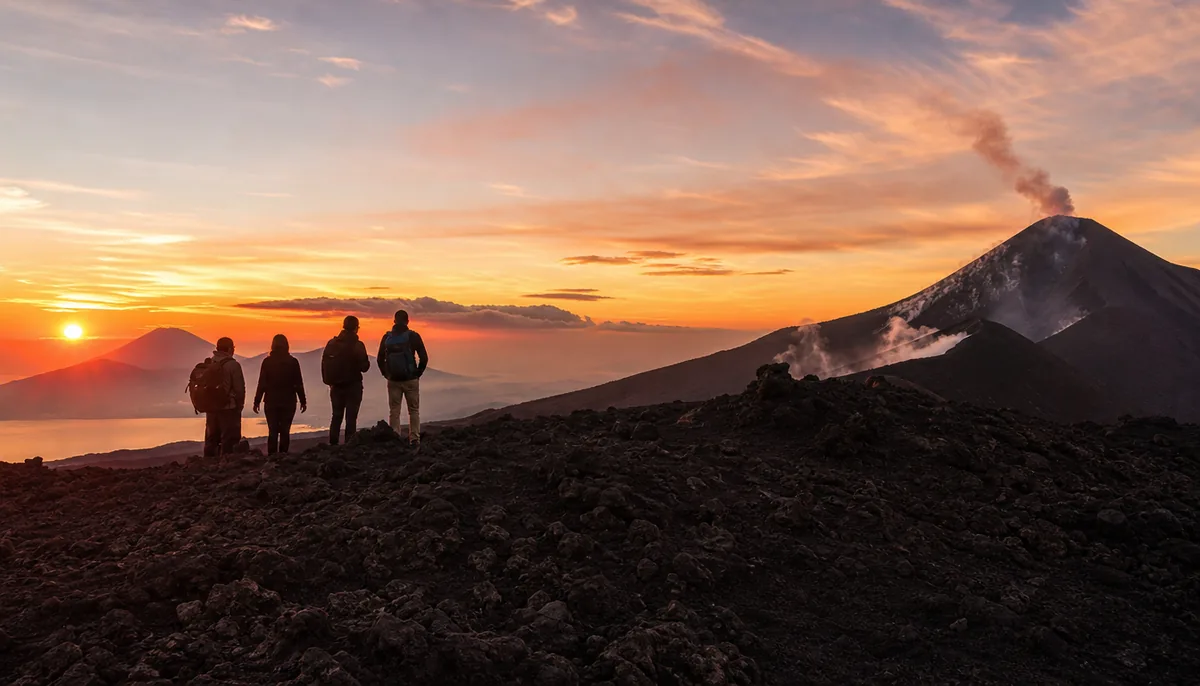
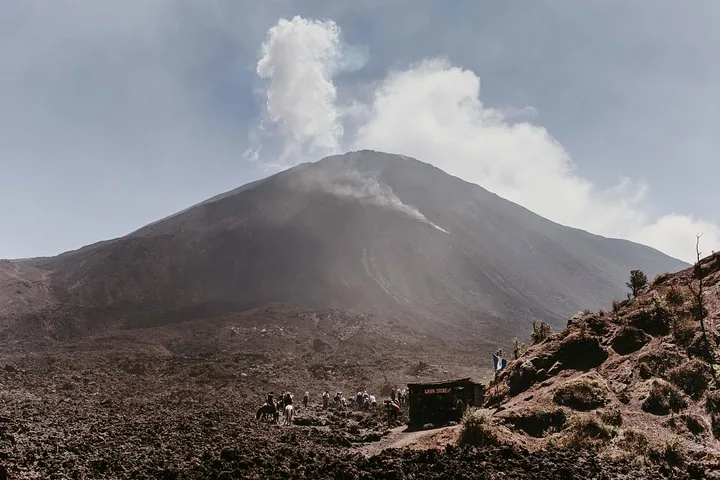
What you will see is the volcano breathing: steam vents on the lava field, warm rock under your boots and a plume over the MacKenney cone. Guides push marshmallows into hot cracks, and that works on most days. The flagship listing says it plainly: "no flowing lava is visible".
Glowing rock only shows up when fresh lava is moving, as in 2021, and then the authorities usually keep hikers well away from it. Anyone who promises lava on a Pacaya tour is selling a memory of a past eruption. The full answer is in our guide to seeing lava at Pacaya.
Frequently asked questions
Is Pacaya volcano erupting right now?
As of 15 October 2026, the latest reports we found describe mild fumarolic activity and degassing from the MacKenney crater, with no significant eruptions. Check INSIVUMEH's daily bulletin for the current day.
Is the Pacaya park open in 2026?
We found no official closure notice in 2026 up to 15 October, and operators report daily departures. Since May 2026 visitors have been told to keep off the lava flows and away from west-flank fissures.
What happens to my Pacaya tour if the volcano erupts?
If the authorities restrict access, the operator cancels and you get a new date or a full refund. You can also cancel for free up to 24 hours before departure.
Where can I check Pacaya's activity?
INSIVUMEH publishes a daily volcano bulletin in Spanish on insivumeh.gob.gt and posts on X as @insivumehgt. CONRED posts alerts on conred.gob.gt.
Ready to book
Choose your tour
Free cancellation up to 24 hours before on every option. Prices are from-prices in USD and move with the season.
Pacaya Volcano Hike from Antigua
- Shared transport from Antigua and back
- Hotel pickup at selected hotels
- Trail guide in Spanish and basic English
Shared Pacaya Hike from Guatemala City
- Hotel pickup and drop-off in Guatemala City
- Local guide certified by the Guatemalan Tourism Board
- Park fee included on the premium option